The Quiet Engineering Discipline That Keeps Demolition Safe, Predictable and Controlled
Demolition looks dramatic, but the safest projects are the calmest ones. Behind every controlled teardown is a plan that determines exactly what comes down, when it comes down, and how the remaining structure will respond. Structural sequencing is the discipline that makes this possible. In the process of demolition in Vancouver WA, sequencing is what prevents uncontrolled load transfer, protects workers, and shields neighboring properties from damage.
For property owners and developers evaluating demolition services, this is also why professional experience matters. A-1 Demolition & Hauling applies sequencing on every project, aligning planning with execution to reduce risk.
Professional demolition uses structural sequencing to remove building elements in a specific order, allowing loads to redistribute gradually. This controlled approach prevents sudden weight shifts, reduces the risk of collapse, and keeps surrounding structures stable throughout the demolition process.
How Structural Sequencing in Demolition Controls Weight Before it Moves
Structural sequencing is the planned order of removal that accounts for how loads travel through a structure. Every building carries weight from the roof and upper floors down through walls, beams, columns, foundations, and building pads. When those paths are cut off too early, loads seek new routes, often with dangerous consequences.
Sequencing respects those load paths. Non-structural components come out first to reduce dead load. Structural elements remain in place until the loads they carry are intentionally relieved. This isn’t guesswork. It’s engineering logic applied to a live site.
People often ask, “Why can’t demolition just knock everything down at once?”
Because buildings aren’t piles of blocks. They’re interconnected systems. In Vancouver, WA, where ground types vary and moisture affects soil behavior, sequencing becomes even more critical to keep foundations and surrounding areas stable.
The Physics Behind Load Transfer Most Projects Can’t Ignore

Load transfer isn’t an abstract theory. It’s physics at work the moment a structural element is altered. Remove a wall too soon, and the load above it doesn’t disappear; it shifts. That shift can crack slabs, stress columns, or overload adjacent supports.
Professional demolition crews evaluate:
- How gravity loads move vertically
- How lateral forces redistribute as walls are removed
- How foundations interact with soil during removal
These factors change depending on construction age, materials, and site conditions. That’s why sequencing varies from project to project. Structural demolition requires strong knowledge and adaptability, not a one-size plan.
Read more about demolition in Vancouver WA
Looking For Professional Demolition Services?
Contact A-1 Demolition & Hauling today to discuss your project and get expert guidance.
What Goes Wrong When Sequencing is Rushed or Skipped
Problems caused by poor sequencing rarely announce themselves immediately. They emerge seconds or minutes later, once loads settle where they shouldn’t.
Common failures include partial collapses, shifting slabs, and damage to nearby parking lots or utilities. These outcomes are especially likely when crews underestimate how concrete elements behave during removal or rely on force rather than planning.
Safety authorities emphasize the need for structural evaluation before demolition begins. OSHA’s demolition standards clearly outline this. Following those principles isn’t just compliance, it’s risk management.
A-1 Demolition & Hauling avoids these scenarios by treating sequencing as non-negotiable. It’s part of honest business practices that protect both workers and clients.
Why Structural Sequencing Saves Time, Money and Liability Exposure
From the client’s perspective, sequencing directly affects cost and predictability. Controlled demolition reduces surprises. Fewer surprises mean fewer delays, fewer change orders, and fewer disputes.
When sequencing is done right:
- Debris falls where planned, not where it shouldn’t
- Adjacent structures remain intact
- Follow-on work by the excavating contractors proceeds smoothly
This matters on sites involving erosion control, septic abandonment, or coordination with multiple subcontractor onsite teams. Predictability supports profitable relationships and builds trust from the client’s perspective.
How Professional Crews Engineer Sequencing Before Equipment Arrives
Sequencing starts long before machinery moves. Professional crews review drawings, inspect connections, and assess how the structure was originally built. They also evaluate access, surrounding structures, and soil behavior.
A typical sequencing strategy progresses through phases:
- Removal of finishes and non-structural elements
- Staged dismantling of upper structural components
- Controlled reduction of load-bearing systems
- Final foundation and slab removal
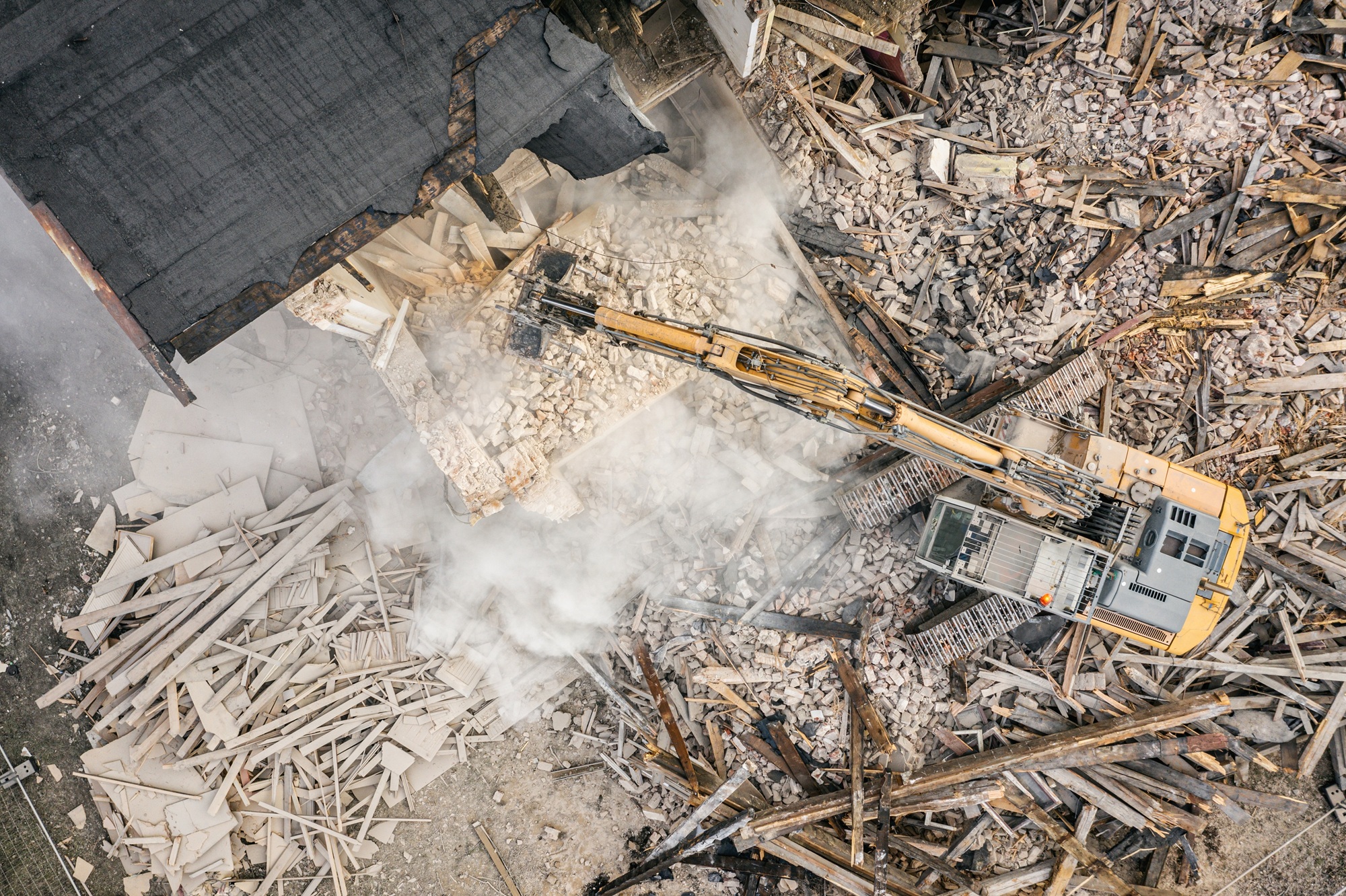
Equipment selection matters here. Conveyor trucks and specialized attachments allow debris to be managed without introducing uncontrolled forces. Super solos and heavier equipment are used only when the structure is ready for them.
A Real-World Scenario Where Sequencing Prevented a Chain Reaction
On a recent commercial project, sequencing protected adjacent parking lots and utilities. The upper floors were dismantled first, reducing vertical loads before addressing the columns. Excavating contractors coordinated erosion control as demolition progressed, keeping ground movement predictable.
The result was a clean site with no secondary damage. That outcome wasn’t luck. It came from coordination across the entire organization and a shared understanding of load behavior. That’s what exceptional construction contracting services look like in practice.
What Property Owners Should Remember about Demolition in Vancouver WA
During demolition in Vancouver WA, sequencing is the foundation of safe demolition. It controls how structures behave as they come apart, protects nearby assets, and supports efficient site turnover. It also reflects the professionalism of the construction company you choose.
Property owners don’t need to know every calculation. They do need to choose a contractor who does. Sequencing is the clearest signal that demolition will be controlled, not chaotic.
A-1 Demolition & Hauling Builds Safety Through Planning, Not Shortcuts
We at A-1 Demolition & Hauling provide the best solutions to our customers by treating demolition as a carefully sequenced process from start to finish. Structural sequencing guides every decision we make, ensuring uncontrolled load transfer never compromises safety or property.
Our team delivers exceptional construction contracting services by combining strong knowledge, field experience, and coordination across our entire organization. From structural demolition to work involving building pads, excavating contractors, and erosion control, each phase is planned with precision.
We’re proud to showcase our demolition expertise through consistent execution, honest business practices, and a foundation of honor that supports long-term client relationships. Contact A-1 Demolition & Hauling for professional demolition services in Vancouver, WA, and see how disciplined planning delivers reliable results in demolition in Vancouver WA.
demolition near me in Vancouver WA
Looking For Professional Demolition Services?
Contact A-1 Demolition & Hauling today to discuss your project and get expert guidance.